
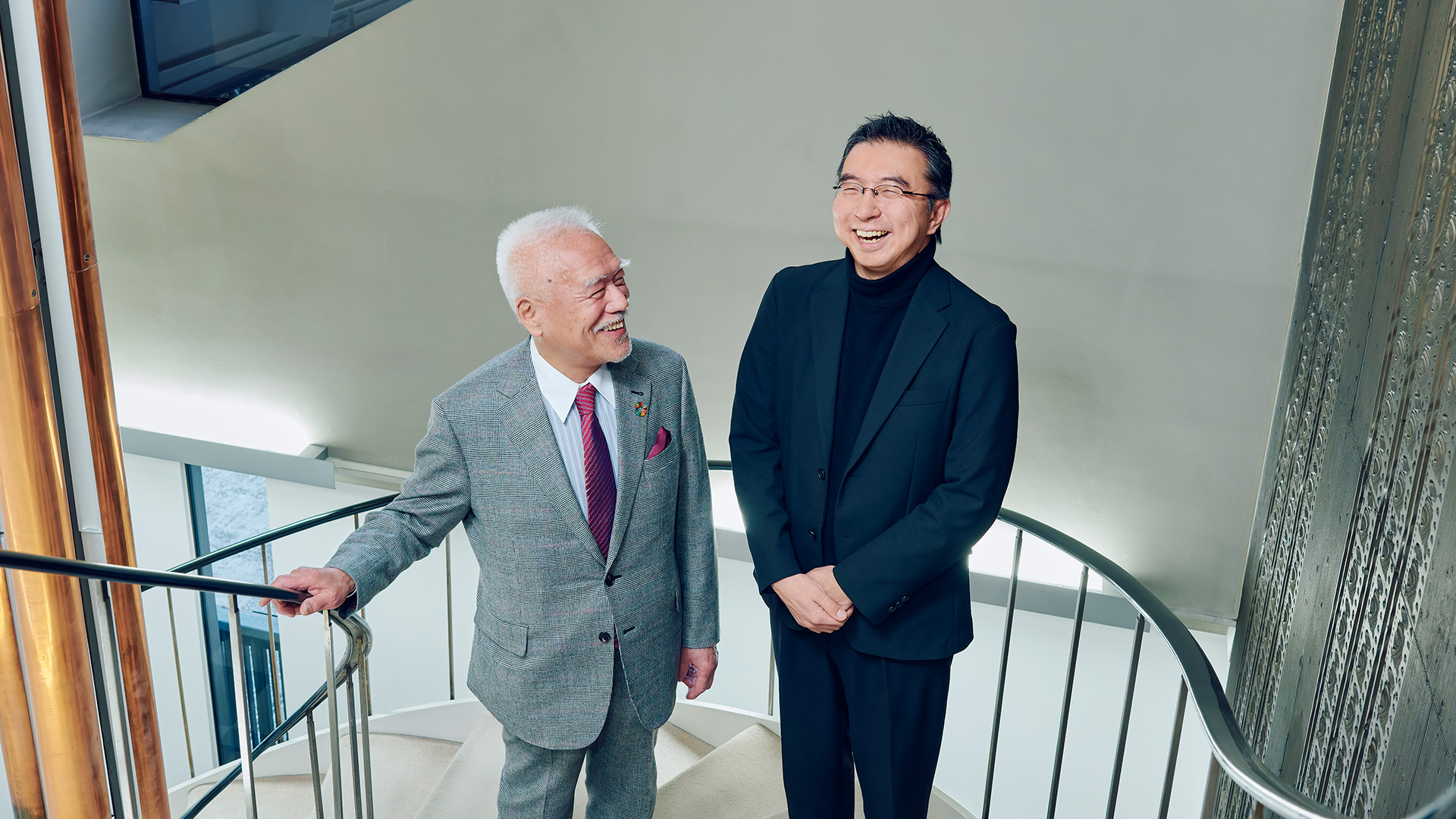
Junzo Tateno
CEO of UNION Corporation
Born in 1947, Junzo Tateno graduated from the Faculty of Law at Konan University (Kobe, Japan) in 1970
and entered Aoki Construction that same year. He joined UNION in 1973 and became CEO and President in 1990.
He serves as Chairman of the Union Foundation for Ergodesign Culture, a Public Interest Incorporated Foundation,
and the Osaka Industrial Bureau. He is also Vice Chairman of the Osaka Chamber of Commerce and Industry.
Sou Fujimoto
- Sou Fujimoto Architects
Sou Fujimoto was born in Hokkaido in 1971.
Graduated from the Department of Architecture, Faculty of Engineering at Tokyo University, he established Sou Fujimoto Architects in 2000.
Among his recent renowned projects is the 1st prize for the 2014 International Competition for the Second Folly of Montpellier, France ("L'Arbre Blanc"). Additionally in 2015, 2017 and 2018, he won several international competitions with 1st prize in various European countries. In Japan, he was selected as the Expo site design producer for the 2025 Japan International Exposition (Osaka/Kansai Expo). In 2024, he was selected for “Subcontract for the Basic Design of the International Center Station Northern Area Complex (Tentative)” in Sendai, Miyagi.
His notable works include; “House of Music” (2021), “MARUHON makiart terrace (Ishinomaki Cultural Center)” (2021), “SHIROIYA HOTEL” (2020), “L’Arbre Blanc” (2019), “Serpentine Gallery Pavilion 2013” (2013), “House NA” (2011), “Musashino Art University Museum & Library” (2010), “House N” (2008) and many more.
22
Tateno
I heard something interesting the other day, from a university professor. He told me he'd been haunted since childhood by memories of a strict father — a real trauma. Through counseling with a psychologist, he managed to work through it and found he could finally talk to his father normally again.
Fujimoto
My father was what you'd call a classic Showa-era disciplinarian — the type who'd scold you without a second thought. I occasionally run into people of that same generation, and I still instinctively brace myself.
Tateno
I see. Well, the story had a follow-up. The psychologist made a fascinating observation: one reason Japan struggles to nurture start-ups may be that so many Japanese people carry exactly that kind of childhood trauma. I thought it was a remarkable way to look at things.
Fujimoto
Quite thought-provoking. It suggests the change has to start somewhere like parenting and early education.
Tateno
Perhaps so.
Fujimoto
Japanese people — and I include myself here — tend toward modesty. Those who actively put themselves forward are the exception, not the rule.
Tateno
And yet, that's precisely why Japan needs to start cultivating the kind of people who do push forward with confidence, the way you see elsewhere in the world.
Fujimoto
I couldn't agree more. Japan is contracting, in so many ways.
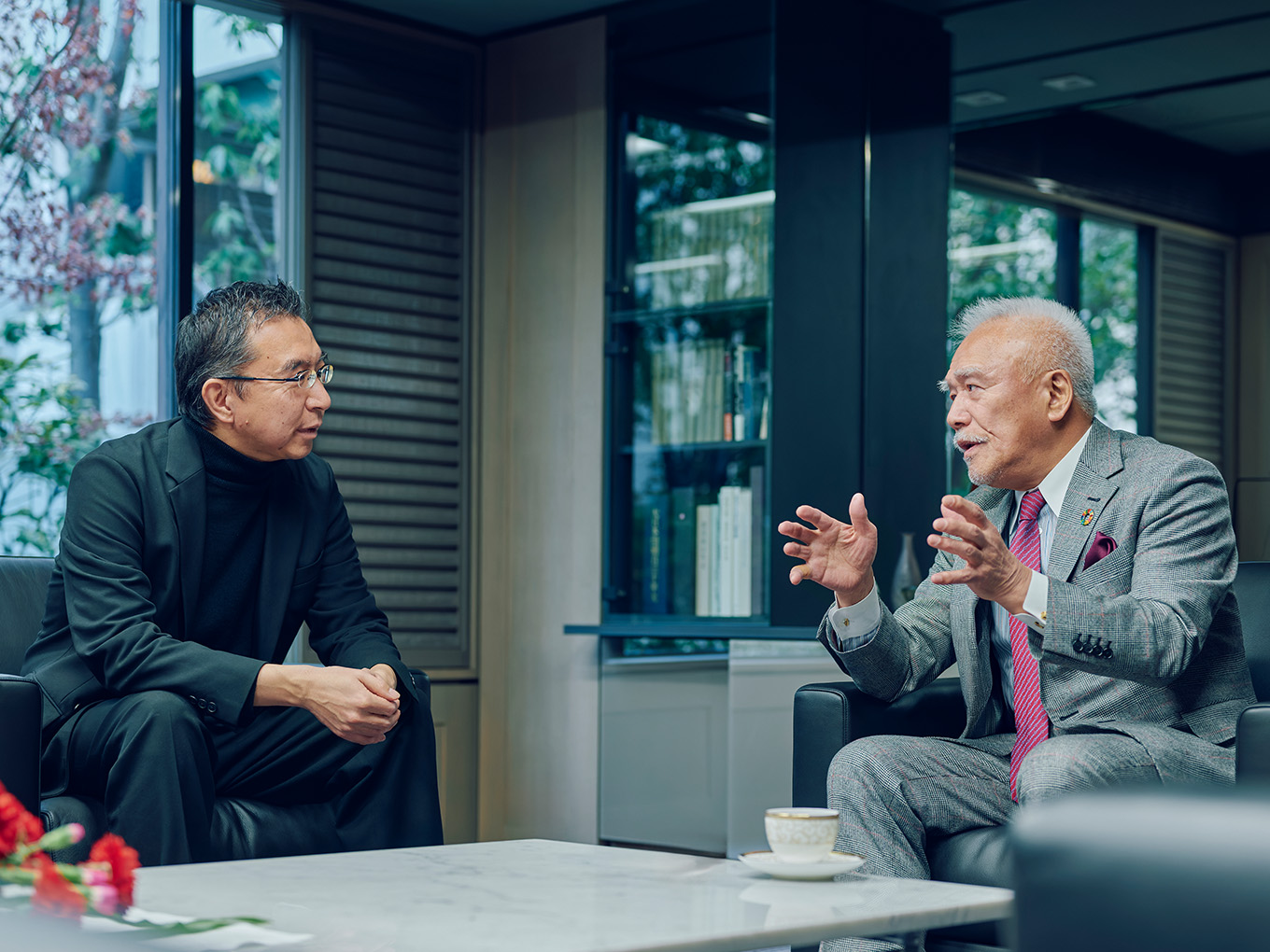
Tateno
The Expo brought you considerable visibility — and, I imagine, considerable criticism as well. Why do you think Japan is so quick to tear people down?
Fujimoto
I'm not entirely sure. In a way, it might be the other side of that same trauma.
Tateno
Success, or any kind of sudden rise, invites resentment. Envy, I suppose.
Fujimoto
What unsettles me most is the pile-on mentality — the way the slightest misstep can unleash a torrent of collective condemnation.
Tateno
Unless we rethink that, the kind of truly influential figures who can lead an era — politicians included — simply won't emerge. Everyone makes mistakes. That's part of living.
Fujimoto
Exactly. A society where a single mistake can effectively end a person's life — that's not the kind of world I want to be part of.
Tateno
Even for the Expo, there was strong opposition in the lead-up to opening. And yet once the gates opened — it was a tremendous success. The Grand Ring is a perfect example: without it, the venue would have been just another ordinary exhibition space. There's a good chance we'd have seen far more heat-related illness in the summer, too.
Fujimoto
What meant the most was hearing from people who actually came and experienced the Grand Ring in person — and then shared that feeling with the world. There's a tendency now, with social media and photography, to feel that seeing something in a photo is enough. But being there, facing the real thing, is something else entirely. I'm glad so many people felt that for themselves.
Tateno
Whenever I bring foreign guests, they all say the same thing: "Why on earth aren't you keeping this?" Leaving just 200 meters of it wouldn't convey anything to the next generation. Photos and documentation will exist, of course — but the sheer spectacle of it, standing right before you, is irreplaceable.
Fujimoto
International media and visitors alike always bring up what happens to the Grand Ring after the Expo — and they're genuinely saddened it won't be preserved. But there are complicated dynamics between the public and private sectors that make it difficult.
Tateno
The Grand Ring has the power to draw people from all over the world. I think we may come to regret this decision.
Fujimoto
Perhaps. Once a structure is demolished, it can't be brought back.
Tateno
I understand it draws on nuki — the traditional Japanese joinery technique — updated for the present day.
Fujimoto
That's right. Modern building codes meant we couldn't rely solely on the old methods. And at several dozen times the scale of Kiyomizudera, the structural demands were enormous. Where the original technique used wooden wedges, we replaced them with metal ones — and our general contractors ran dozens of load tests to identify every strength and vulnerability.
Tateno
Given the stakes, any accident would have been catastrophic. And not a single one occurred. That, above everything, was the real achievement.
Fujimoto
The operations team truly delivered.
Tateno
When the subway stopped and visitors were stranded, people simply settled in beneath the Grand Ring and inside the pavilions. A disruption that turned into an experience.
Fujimoto
Several overseas pavilions stayed open after hours, offering drinks and putting on music.
Tateno
That kind of spontaneous, adaptable response — that's a very international quality. In Japan, everything requires sign-off from somewhere.
Fujimoto
Among the Japanese pavilions by Yoichi Ochiai had remote operation capabilities, so they were able to activate sound and lighting from afar. I wasn't on-site that night, but there seemed to be a wonderful spirit of let's just make the most of this.
Tateno
Hot, inconvenient, and utterly unexpected — but a memory unlike any other, I'd imagine.
Tateno
Has the Expo changed anything for you — before and after?
Fujimoto
Since being appointed as producer, I've found more people rallying behind my work here in Japan. The media was fairly critical at times, but the Grand Ring brought a whole new audience to my work — including a much wider network of entrepreneurs and founders.
Tateno
That's wonderful.
Fujimoto
Through Hiroaki Miyata — a fellow Expo producer — I've been brought in to design a new collaborative facility in Hida that will house a university called Co-Innovation University, among other things. Professor Miyata was being considered as its inaugural president (he now serves as a special advisor), which is how I got involved. It started as a single academic building, but has since grown into a mixed complex with a hotel, art spaces, and children's play areas — something with real roots in the fabric of the town. I feel very fortunate.
Tateno
A building by you will draw people. The power of architecture to revitalize a place is immense.
Fujimoto
Absolutely. Particularly with the challenge of how regional areas can rediscover their energy. A building, the local community, and the interplay of everyday and extraordinary moments — when those elements align, something genuinely interesting can happen.
Tateno
Young people arriving tends to breathe life into a place.
Fujimoto
Yes. Hida is a beautiful mountain town, and with a university comes a new, younger community — one that can engage with locals, create new value, and ideally draw visitors in turn.
Tateno
A real challenge, given how many universities are struggling with declining enrollment.
Fujimoto
But this is a different kind of institution — one with a sharp, distinctive vision. I'm genuinely excited to see what it becomes.
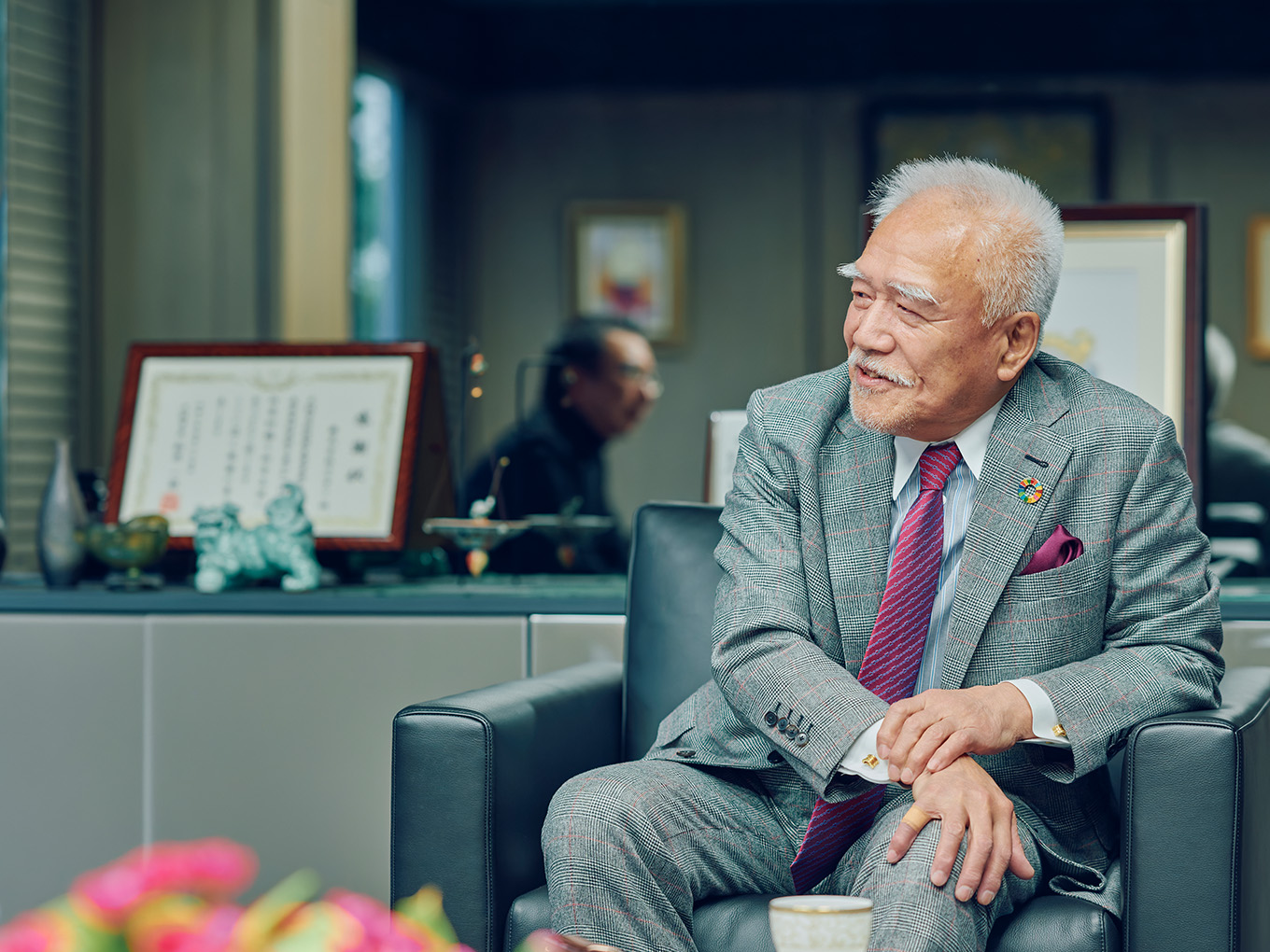
Tateno
Any other projects that have grown out of the Expo?
Fujimoto
Yes — I'm working on something quite unusual in the Seto Inland Sea: a project called Umishima, or "Sea Island." The Seto Inland Sea is such a calm, serene body of water, and the commission began simply as a request to design a boat. But I thought, a boat feels a bit ordinary — so I proposed something more like a floating island. And they said, that's interesting, let's do it.
Tateno
Just hearing about it, I'm already intrigued.
Fujimoto
It's roughly 120 meters from end to end — like a small island, with greenery, guest rooms, and a restaurant.
Tateno
Wonderful. If you're going to build something, it ought to be something the world has never seen before.
Tateno
How much do you feel your upbringing has shaped you?
Fujimoto
Looking back, quite profoundly. When I was in second grade, we moved from one of Hokkaido's larger cities to a small rural town — my father was opening a medical practice. That shift had an enormous influence on me.
Tateno
I've heard Tadao Ando say that watching carpenters work on renovations at his childhood home first sparked his fascination with architecture. Those early encounters matter enormously. My own upbringing was entirely ordinary — nothing of that kind.
Fujimoto
I have two children myself, and they're growing up in Tokyo. It's a stimulating city, of course — but it's deeply artificial. The absence of open nature, of the freedom to just wander and play outdoors, does give me a slight unease.
Tateno
My childhood came just after the war — a time of scarcity. We made bamboo dragonflies, walked on stilts, built things with whatever we could find. My enduring interest in making things comes directly from that. Perhaps there's something to be said for ensuring that young people today — even within modern education — have more opportunities to work with their hands.
Fujimoto
I think so. Today, so much of both city life and education comes pre-configured. There's a pressure to operate within defined parameters. The experience of genuine scarcity — this doesn't exist, so let's make it — or of unstructured natural spaces — there's nothing here, so how do we play? — those formative conditions feel increasingly rare.
Tateno
Entirely true. There are brilliant young people today, of course. But I'd hope they might have opportunities to set lessons aside and fall completely, passionately into something that genuinely grips them.
Fujimoto
That sudden ignition — a personal fascination that unexpectedly sets everything alight. I understand that deeply.
Tateno
Cram schools and extracurriculars — they tend to develop a certain kind of competence, but only within a particular range. I've long felt uneasy about that.
Fujimoto
There's still a tendency to rank people by grades and evaluate them almost entirely by that measure. But real human activity is so much richer than that. I'd like to see a world where life's richness can be understood through many different lenses and values.
Tateno
I wasn't much of a student myself — I was quite the troublemaker in my day. But I learned to survive through my own ingenuity and stubbornness. Today, I sometimes see people who've graduated from the finest universities — and a single setback undoes them entirely. Whereas someone who has fallen and gotten back up repeatedly — they develop a resilience that carries them through almost anything.
Fujimoto
What we need is an education that cultivates genuine human capacity — one that recognizes and nurtures the distinct character that each person carries. The social systems need to follow.
Tateno
I feel it deeply. Everything today is bound up in compliance. Japan has veered to an extreme. There was a time when a neighbor could scold a child without a second thought. Now a teacher who raises their voice even slightly risks a harassment complaint. In the workplace, people who want to work overtime can't.
Fujimoto
Rules and frameworks imposed from above — they tend to calcify. If you want to do something, you should be able to pursue it according to your own circumstances and judgment. When I was younger, work was so absorbing I'd often be at it through the night without thinking twice.
Tateno
And now you'd be told not to. Japan is already struggling with productivity — and then we're told to work less as well. I genuinely wonder where it all leads.
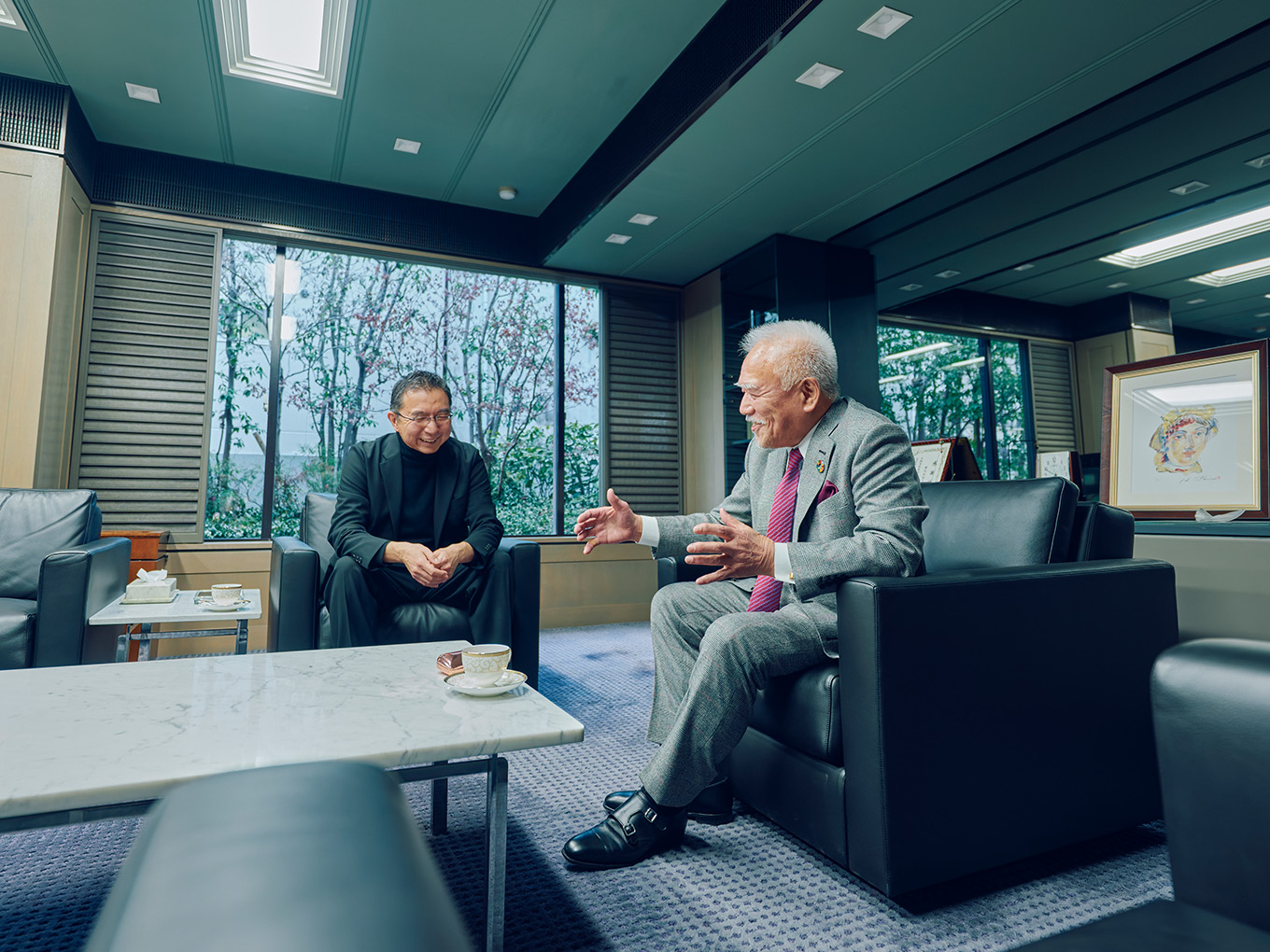
Tateno
Are you familiar with Espacio Nagoya Castle — a new hotel that's opened directly opposite Nagoya Castle? Designed by Nikken Sekkei and Takenaka Corporation, with an exterior that evokes the castle itself?
Fujimoto
Ah, the castle-like one. I've seen it somewhere.
Tateno
It gives Nagoya Castle a real run for its money. The suites start at three million yen a night.
Fujimoto
A serious luxury property.
Tateno
The client had an extraordinary level of conviction and pushed for something genuinely daring. We were commissioned to create bespoke door handles for the project.
Fujimoto
Remarkable. The presence of someone who holds a vision and pulls everyone toward it — that's a rare and valuable thing.
Tateno
And in Japan right now, those people feel increasingly scarce.
Fujimoto
I'm currently in the international architectural competition for the Louvre Museum — we've been shortlisted as one of five finalists. The other Japanese entrants are SANAA — Kazuyo Sejima and Ryue Nishizawa — alongside two American teams and one British team. The fact that an institution with the history of the Louvre is actively holding an open competition, inviting ideas from around the world, and genuinely evaluating them on merit — that speaks to a remarkable cultural depth.
Tateno
The glass pyramid was met with fierce criticism at first, and now it simply belongs.
Fujimoto
More than belongs — it's become iconic.
Tateno
The Centre Pompidou was equally radical. France has something quite special in that regard. Japan, particularly the public sector, rarely takes that kind of leap.
Fujimoto
France has this quality of absolute conviction — this is the right thing, and we're doing it — regardless of the criticism. You can feel that.
Tateno
Japan's political leaders once had that same strength of purpose. I'd like to see you bring that kind of daring energy here — not least for the sake of keeping the craftsman's art alive and passing it forward.
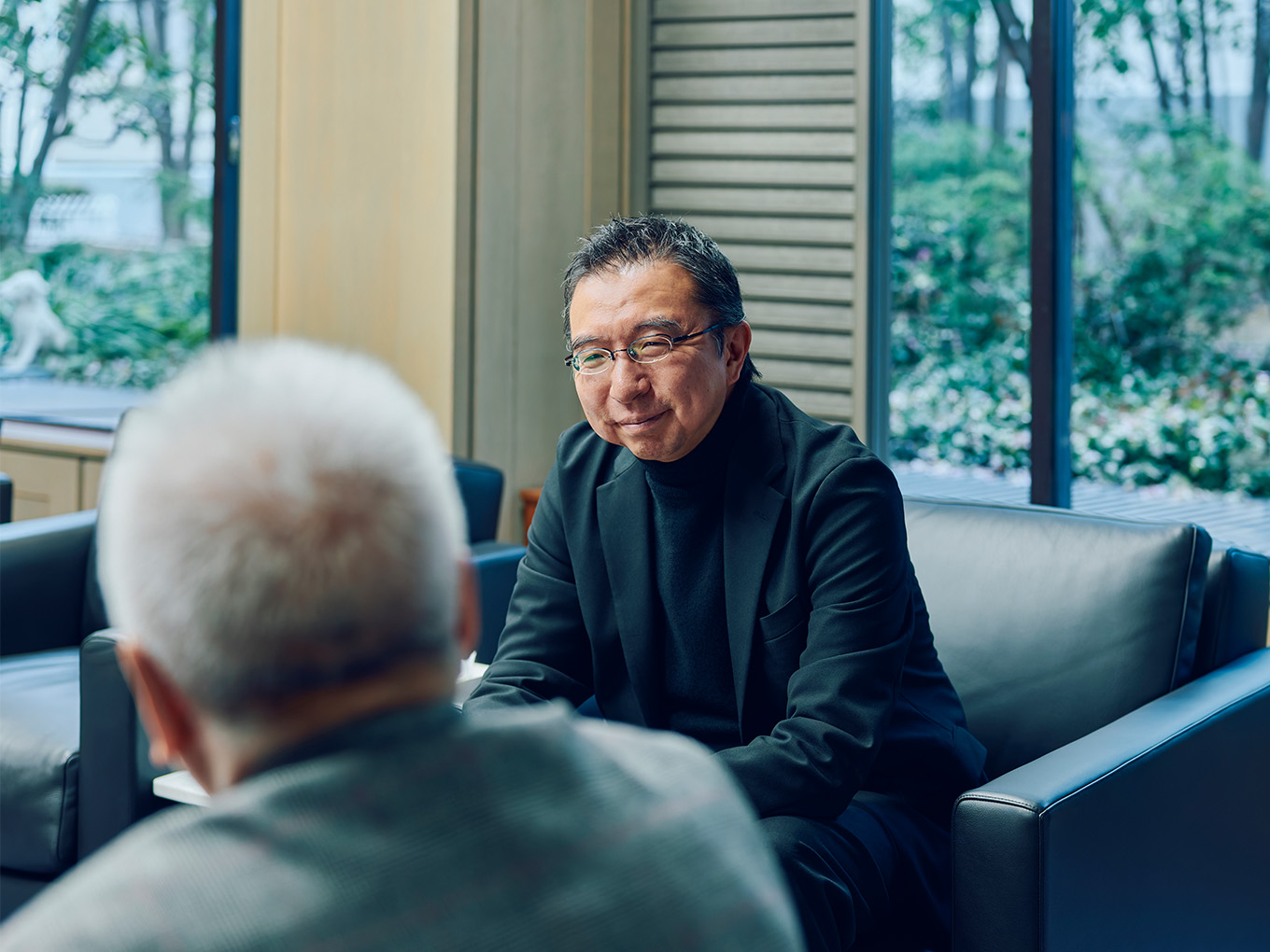
Fujimoto
I'll do my best. Craftspeople are only going to become more precious as time goes on — in the truest sense.
Tateno
Without people of vision to commission their work, craftspeople simply can't sustain themselves. Ideally, someone like yourself would bring them the kind of impossible brief that forces them to reach beyond what they thought possible. Do you find that being on-site — seeing the place firsthand — stirs something in you?
Fujimoto
It does. Recently, the Ministry of Economy, Trade and Industry established a committee to evaluate the outcomes of the Expo — to examine what was accomplished, and how those achievements might be carried into the future. I was asked to join as one of the members. Among all the legacies of the Expo, there was broad consensus that the most enduring and essential was this: challenging yourself is something to be proud of.
Tateno
Getting to the heart of it.
Fujimoto
We discussed how that spirit of challenge should be passed on to the next generation — and I believe it deeply. Doing only what's safe and achievable — it's just not very interesting.
Tateno
The construction method behind the Grand Ring was itself an extraordinary act of challenge. We have to make sure that the next time someone attempts something like it, the knowledge and craft still exist to make it possible. Just as the Ise Grand Shrine's shikinen sengu keeps those ancient building traditions alive.
Fujimoto
Absolutely. I want to take on something impossibly difficult again.
Tateno
Exactly — the kind of thing that looks undoable from the outside. That spirit reaches people, especially young ones. I want to live in a world where you're encouraged to try, even if you fail.
Fujimoto
And a world that responds to failure with generosity. When people are immediately torn apart for falling short, everyone retreats into caution.
Tateno
Recognizing the courage in the attempt, and offering another chance. Japan is only just beginning to reach a place where someone who's gone bankrupt can rise again — and I think that's a genuinely hopeful sign. Even President Trump has failed countless times.
Fujimoto
A world where the more failures you've lived through, the more trustworthy you become — that's the world I want.
Tateno
Is there anything you'd like to take on next?
Fujimoto
I'd love to find the right person — someone with a bold, clear vision — and do something truly interesting together.
Tateno
The Grand Ring brought your work to a vast audience. Expectations are high.
Fujimoto
I feel that. The project earned a kind of trust I hadn't anticipated. And through all the criticism that surrounded the Expo in the media, I discovered there are also people who simply say: it's going to be fine. That meant a great deal.
Tateno
The early criticism was relentless.
Fujimoto
Which is why I'm genuinely grateful for the support you've shown throughout all of this. The Expo led me to the university project in Hida, the Seto Inland Sea, and many other regional engagements. I've also begun collaborating with Hitoshi Tanaka, the founder of JINS, who is deeply committed to his hometown in Gunma Prefecture. I want to keep taking on new challenges — in support of people like him, who carry a real passion for their region.
Tateno
There's actually a sukiya-style farmhouse in Ikoma that I've been thinking about. It's beginning to deteriorate, and I've been wondering whether it might be reinvented as a training retreat. Here — these are some photographs.
(Photographs of the farmhouse are shared.)
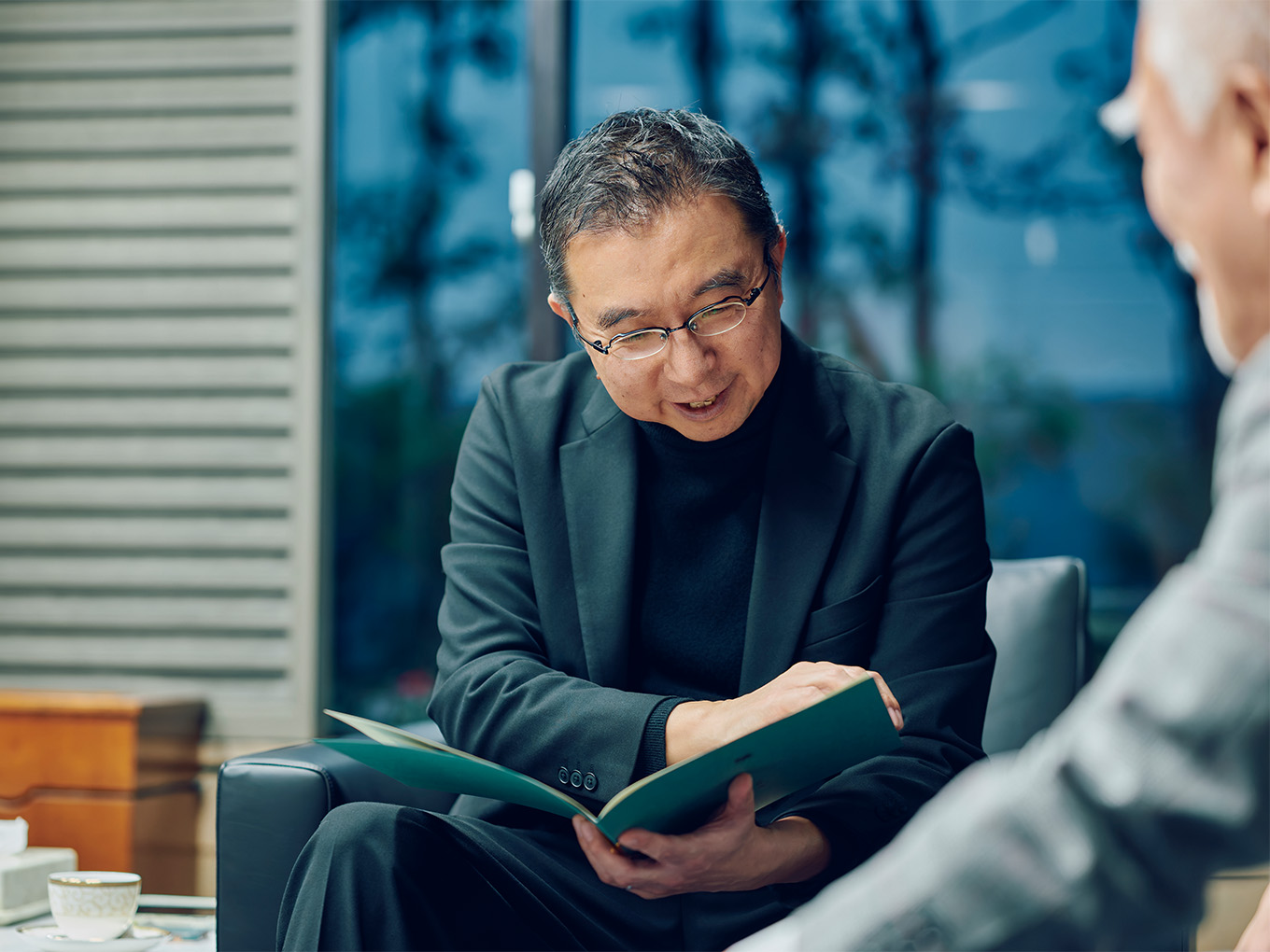
Fujimoto
Oh, this is magnificent — a truly exceptional sukiya structure. And the setting is extraordinary. When was it built?
Tateno
Over fifty years ago. It's been unoccupied for more than a decade now, so it's quite run down.
Fujimoto
A house that isn't lived in deteriorates quickly.
Tateno
In its time, there were crabs in the stream nearby, raccoon dogs in the garden — it was filled with natural life. It was built by Masaya Hirata, one of the foremost masters of the sukiya style. And look — that tsuitate screen there, the single-stroke carving — that too is by Hirata...
(Moving toward the carved screen inside.)
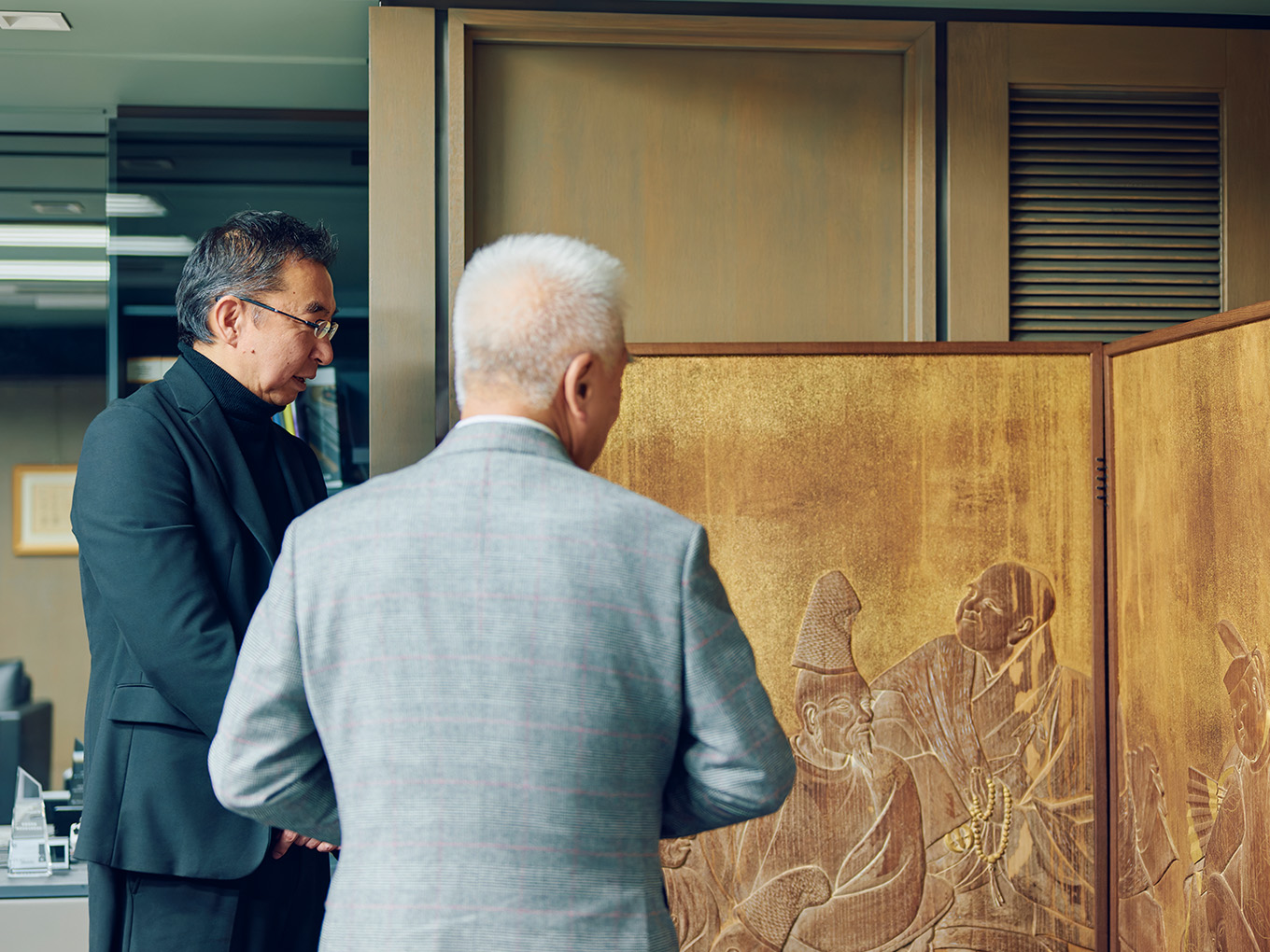
Fujimoto
Remarkable. My goodness. This is... this is at the level of a cultural heritage piece.
Tateno
I doubt any carpenter working today could achieve this.
Fujimoto
The same hand that produced carving of this precision built the whole of this house.
Tateno
Yes. He was a celebrated figure — the subject of a film, in which he was portrayed by Hisaya Morishige (one of Japan’s most celebrated postwar actors).
Fujimoto
I'd very much like to visit the site in person sometime.
Tateno
Please do. You'd be most welcome.
(Close of session.)
All
Thank you.
Photography: Yasuhiro Sawao
Writing: Naoki Moritani
Direction: Haruhi Imai